Refrigerant Leak Repair in Lake Charles, LA
When your AC loses its charge, a licensed local technician can find the leak, repair it and recharge the system the right way.
Learn the signs of a leak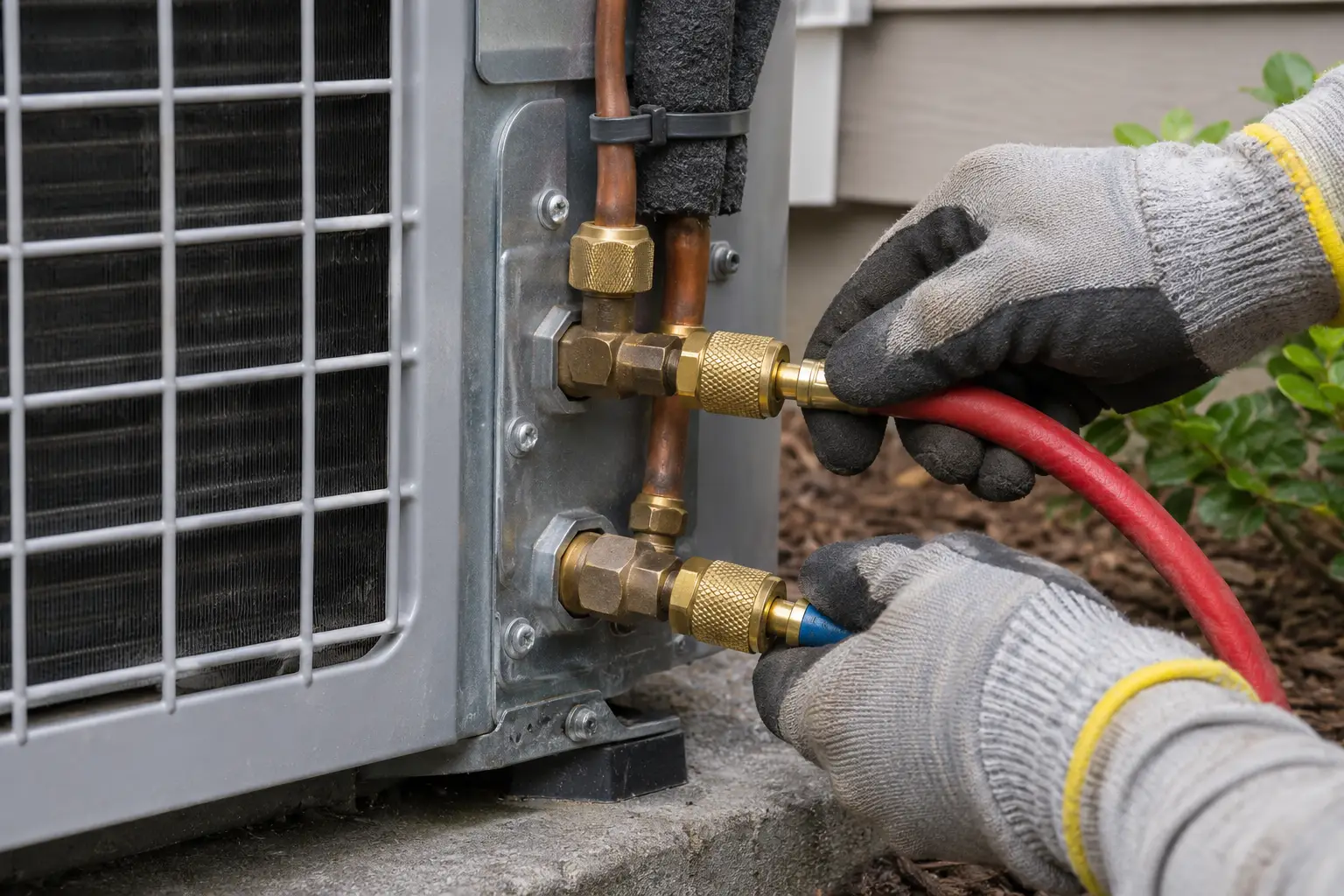
Signs of a refrigerant leak in your AC
A refrigerant leak rarely shows up all at once. The system loses a little cooling power each week until a hot spell exposes it.
Longer run times
The AC runs longer every week to reach the same setting, and on hot afternoons it never quite gets there.
Ice on the big line
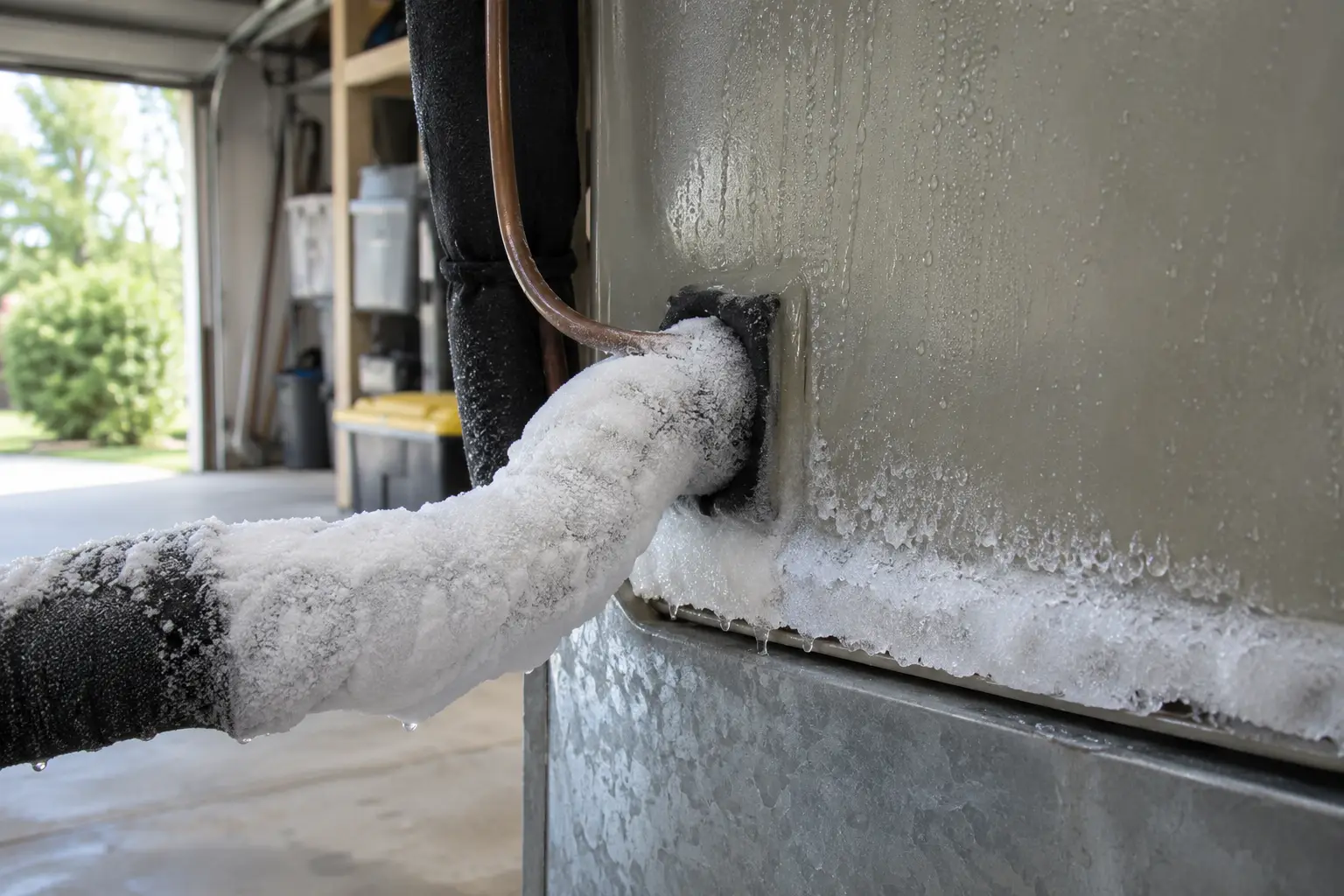
Frost shows up on the fat, insulated suction line outside or across the inside coil.
Hissing or bubbling
You hear a hiss near the outdoor unit, the indoor coil or along the lines while the system runs.
Oily spots
Oil travels with the refrigerant, so escaping gas tends to leave a slick, dark film at the leak.
Air that is only cool
The vents blow air that feels cool rather than cold, and the house feels damp.
Higher power bills
A system low on charge runs harder for longer, and your summer electric bill climbs without a clear reason.
Why topping off refrigerant is not a repair
A refrigerant leak in Lake Charles homes often gets the same quick answer, a recharge. Many homeowners here have had an AC recharged one summer, only to lose cooling again the next. The reason is simple. Refrigerant does not wear out, so if the charge is low, it escaped through a hole.
Adding more without fixing that hole buys a few weeks or months. Meanwhile the compressor runs hot and short of oil, which is how a small leak turns into a failed compressor.
A low charge also hurts comfort. With less refrigerant, the indoor coil cannot pull as much water out of the air, so the house feels damp and warm at the same time. In our climate that is often the first thing people notice.
A real refrigerant leak repair finds the leak, fixes it, proves the system holds pressure and then charges it to the exact amount the maker lists. It takes longer than a top off, but it ends the problem.
What a refrigerant leak repair includes, step by step
Every step below is done by a technician certified to handle refrigerant under EPA Section 608.
Confirm the low charge
Readings at the condenser separate a true low charge from an airflow fault that only mimics one.
Search for the leak
An electronic leak detector, bubble solution on joints and valves, and sometimes a dye or a nitrogen pressure test narrow down the spot.
Recover and repair
Remaining refrigerant is recovered into a tank, and the joint, valve, line or coil is repaired or replaced.
Pressure test
The system is filled with dry nitrogen and watched to prove the repair holds before any refrigerant goes back in.
Deep vacuum
A vacuum pump pulls out air and moisture. Moisture left inside mixes with oil and damages the compressor over time.
Charge by the numbers
Refrigerant is weighed in or set by superheat and subcooling readings, then the cooling is tested at the vents.
Where AC refrigerant leaks usually start
Leaks hide in a few predictable places. Where it is decides whether a small repair fixes it or a part needs replacing.
| Location | What causes it | Typical fix |
|---|---|---|
| Indoor coil | Corrosion that eats pinholes through the copper tubing | Patch is rarely possible, so the coil is often replaced |
| Outdoor coil | Corrosion, hail or yard tool damage to the tubes | Repair at the damaged spot, or coil replacement |
| Service valves | Worn valve cores and caps at the outdoor unit | New cores and sealed caps |
| Brazed joints | Years of vibration crack a joint | Clean the joint and braze it again |
| Copper line set | Lines rubbing on siding or nicked by a trimmer | Section repair and new insulation |
Indoor coil corrosion is common in humid homes. Chemicals from cleaners, paints and building materials can react with moisture on the copper and eat tiny holes from the inside. Those pinholes are hard to find and are the main reason a coil gets replaced instead of patched.
Outdoor leaks have their own causes here. String trimmers and mowers nick the copper lines, coils near busy yards collect debris, and storm winds can bend tubing. Keeping a clear space around the unit protects the lines.
Repair the leak or replace the part
After the leak turns up, the technician lays out the options. Most cases fall into one of these two lists.
A repair usually makes sense when
- The leak is at a valve core, a cap or a single joint.
- A line set was nicked and the damage is in one spot.
- The system is newer and the coils are in good shape.
Replacing a part or the system is worth discussing when
- The indoor coil has many pinholes from corrosion.
- The system runs on R-22, which is no longer made.
- The compressor already ran low on charge for a long time.
A note on refrigerant types
Older systems use R-22, most systems from the last fifteen years use R-410A, and many new systems now use R-454B or R-32. Each one needs its own equipment and charge, so the technician checks the label on your outdoor unit before any work begins. Never mix refrigerants.
Refrigerant leak questions from homeowners
-
Does an AC use up refrigerant over time?
No. It travels around a closed circuit and never gets burned off. If the charge is low, it leaked out somewhere. That is why a technician looks for the leak instead of simply adding more.
-
Should I worry about safety at home around a refrigerant leak?
A slow leak in an open room is rarely a breathing hazard, yet liquid refrigerant can freeze skin and the gas can crowd out oxygen in a cramped space. Keep hands off frosted lines and hissing fittings, and keep kids and animals clear until the unit is inspected.
-
Can I buy refrigerant and recharge my own AC?
No. Federal rules require EPA Section 608 certification to buy and handle refrigerant for home systems. Charging also needs gauges and the right method, since too much refrigerant damages a system as surely as too little.
-
What tells me my AC might be leaking refrigerant?
Common signs are cooling that fades over several weeks, a hissing or bubbling sound near the coils, ice on the large copper line and oily stains on fittings or the coil. A technician confirms it with pressure and temperature readings.
-
My AC was recharged last summer and is low again. Why?
The leak was never found or fixed, so the new refrigerant escaped the same way. A proper repair finds the leak, repairs it, pulls the system into a deep vacuum and then charges it to the maker's specification.
-
Is finding the leak a quick job?
A leak at a valve or an exposed joint can turn up within minutes. A pinhole inside a coil can take much longer and may need a nitrogen pressure test or dye. The technician explains what the search involves once the low charge is confirmed.
-
Are refrigerant leaks common in Lake Charles homes?
They are one of the regular causes of an AC that slowly stops cooling here. Humidity on indoor coils, long run times and yard work around outdoor units all play a part. A refrigerant leak in Lake Charles usually reveals itself once the first stretch of steady heat arrives.
-
Can the technician repair a leak on an older R-22 system?
Often, yes, if the leak is at a joint or a valve. R-22 is no longer made, though, so supply is limited. On an older unit with a leaking coil, the technician can explain the condition of the system so you can weigh a repair against a newer system.
Cooling problems that a leak can cause
A low charge often shows up first as one of these problems. See every air conditioning service.