
AC Capacitor and Contactor Repair in Lake Charles, LA
If your outdoor unit hums, clicks or will not start its fan, a local technician can test and replace the failed part.
Check the warning signs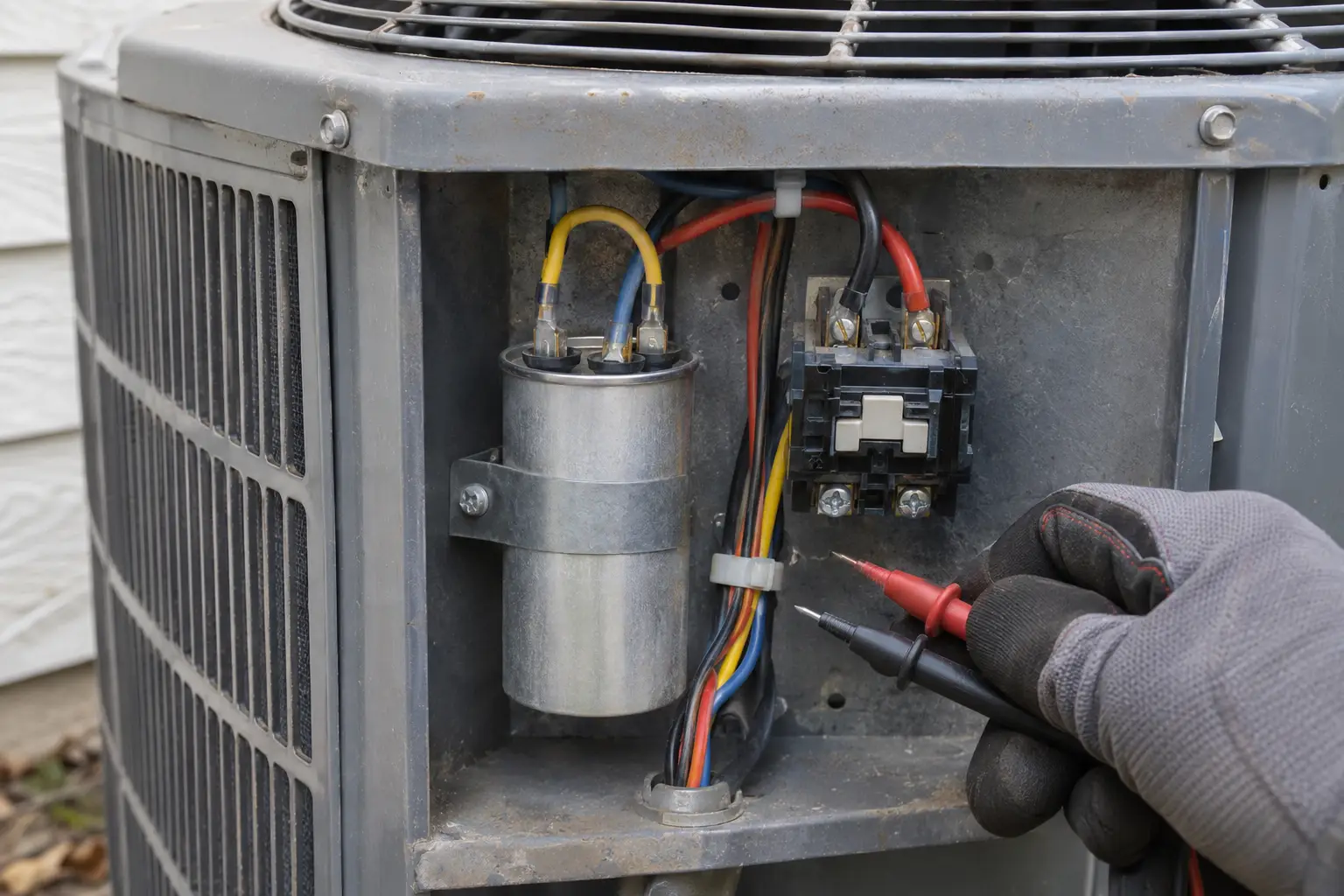
What the AC capacitor and contactor do
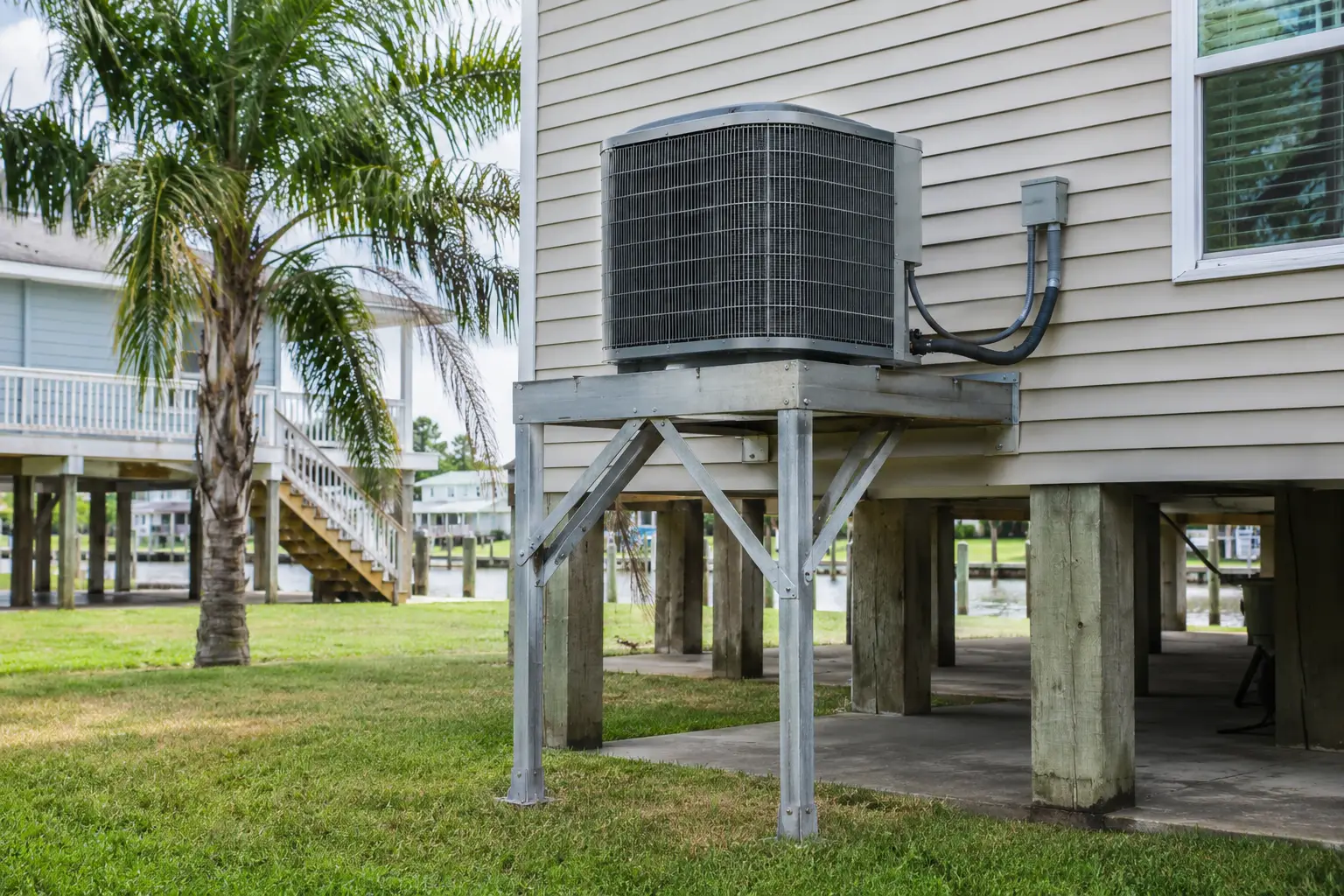
Two small parts inside the outdoor unit decide whether your AC starts. When either one fails, the whole system stops cooling, even if everything else is healthy.
The capacitor
The capacitor stores energy and releases it to give the compressor and the outdoor fan motor a strong start, then helps them run smoothly. Most outdoor units have a round dual capacitor that serves both motors, and some have a separate one for each.
Heat is its enemy. A capacitor that sits in a hot metal cabinet through a long Lake Charles summer slowly loses strength until a motor can no longer start on it.
The contactor
The contactor is a switch. When the thermostat calls for cooling, a low voltage signal pulls the contactor closed, and full power flows to the compressor and the fan. When the call ends, it opens again.
Every cycle makes a tiny spark across its contacts. Over thousands of starts, the contacts pit and burn, and power stops flowing cleanly.
Because both parts sit side by side in the same panel, a technician checking an AC capacitor in Lake Charles always looks at the contactor too. One test visit covers both.
Signs of a bad AC capacitor or a worn contactor
The symptoms overlap, which is why a meter test matters. These lists show what each part usually does when it fails.
A failing capacitor
- You hear a steady hum outside, yet the fan blade sits still.
- The compressor clicks on, then shuts off a moment later.
- The fan starts only after a long delay.
- The top of the capacitor is swollen or leaking oil.
- The breaker trips when the AC tries to start.
A worn contactor
- The indoor fan runs, but the outdoor unit stays silent.
- The outdoor unit keeps running when the thermostat is off.
- You hear a loud buzz or chatter from the outdoor unit.
- The unit starts and stops in quick bursts.
- Ants or insects are packed around the switch.
Why you should never touch an AC capacitor
A capacitor can hold a dangerous charge for some time after the power is off, and the parts around it carry 240 volts while the unit is live. Videos that show homeowners swapping capacitors skip the risk of a serious shock.
Leave the access panel closed. When the unit only hums or refuses to start, shut it down at both the thermostat and the breaker before you call us. Running a motor that cannot start can burn it out in minutes.
Safe steps for a homeowner
Set the thermostat to off, flip the AC breaker down and keep kids and pets clear of the condenser until a technician looks at it.
What a capacitor and contactor repair includes
The work is quick once the problem is confirmed. Testing first keeps good parts in place and finds the real cause.
Power down safely
The technician shuts off power at the disconnect, confirms it is off and safely discharges the capacitor.
Meter tests
The capacitor is measured against the rating on its label. The contactor coil and contacts are checked for voltage and wear.
Matching parts
A failed part is replaced with one of the same ratings, so the motors get exactly the support they were built for.
Running check
With power restored, the motors are checked for amp draw and the system is run to confirm it cools.
What wears out AC capacitors and contactors in Lake Charles
These parts do not last forever anywhere, but our climate puts them through more starts and more heat than most. Knowing why they fail helps you spot trouble early.
Shade helps a little. A unit that sits in full afternoon sun runs hotter inside its cabinet than one shaded by the house, but plants should still stay at least two feet away so air can move.
If the same part fails again within a season or two, something else may be the real cause, such as a struggling fan motor, a dirty outdoor coil or low voltage at the house. The technician looks for that before closing up.
| What wears them | How it shows up |
|---|---|
| Long cooling season | More starts and more hours each year wear both parts sooner |
| Heat inside the unit | Summer sun on a dark cabinet bakes the capacitor |
| Storms and power flickers | Surges and brownouts stress the parts at every restart |
| Ants and insects | Fire ants and other insects nest in contactors and jam the contacts |
| Wrong replacement part | A capacitor with the wrong rating fails early and strains the motor |
Other parts checked while the panel is open
Outdoor fan motor
A motor that ran for days on a weak capacitor may have overheated. The technician checks its bearings and amp draw, since a weak motor will kill a new capacitor quickly.
Compressor start
An older compressor that struggles to start may benefit from a hard start kit, a small add on that gives it an extra boost. It is not right for every system, and the technician can explain whether it fits yours.
Wiring and the disconnect
Loose, burned or chewed wires at the contactor and the outdoor disconnect cause the same symptoms as a failed part. They get tightened or replaced as needed.
Thermostat signal
If the contactor never pulls in, the problem might be the low voltage signal from the thermostat. Our page on thermostat repair covers that side of the system.
AC capacitor and contactor questions
-
What are the signs of a failing AC capacitor?
The classic sign is an outdoor unit that hums but does not start, or a fan that sits still while the compressor tries to run. A capacitor with a bulging or leaking top is almost certainly bad. Only a meter test confirms a weak one that still looks normal.
-
Can I give the outdoor fan a push with a stick to get it going?
Please do not. If the fan starts when pushed, the capacitor is weak, but reaching near the fan puts you close to moving blades and live high voltage parts. Turn the system off and call instead, because running on a bad capacitor can overheat the motor.
-
Why did my capacitor fail after a storm?
Power surges and the voltage dips that come with thunderstorms stress capacitors and contactors, and a part that was already worn may fail on the next start. A surge protector at the outdoor disconnect can reduce the risk, and a technician can tell you if one fits your system.
-
My outdoor unit will not turn off. Is that the contactor?
Very likely. When the contacts weld together, the outdoor unit keeps running even when the thermostat is off. Shut the system off at the breaker and call, since it can run the compressor nonstop and freeze the coil.
-
Is a capacitor repair a big job?
Usually not. Once the technician confirms the failure with a meter, swapping a capacitor or a contactor takes little time. What matters most is using a part with the right ratings and checking whether something else caused the failure.
-
How common is a bad AC capacitor in Lake Charles?
Very common. A failed AC capacitor in Lake Charles is one of the repairs we hear about most from June through September, because heat inside the outdoor cabinet and long daily run times shorten its life. A weak one often fails on the first very hot afternoon.
-
Can a bad capacitor damage other parts?
Yes. A motor that keeps trying to start on a weak capacitor overheats, and a compressor that starts hard every cycle wears faster. Replacing a failing capacitor early protects the larger parts it supports.
-
Should both parts be replaced at the same time?
Not always. They fail for different reasons. If the contactor is pitted and the capacitor tests weak on the same visit, replacing both makes sense, and the technician will show you the readings so you can decide.
Related electrical and cooling repairs
The thermostat is the other half of the controls group, and an AC not cooling often starts with these parts. See every air conditioning service.
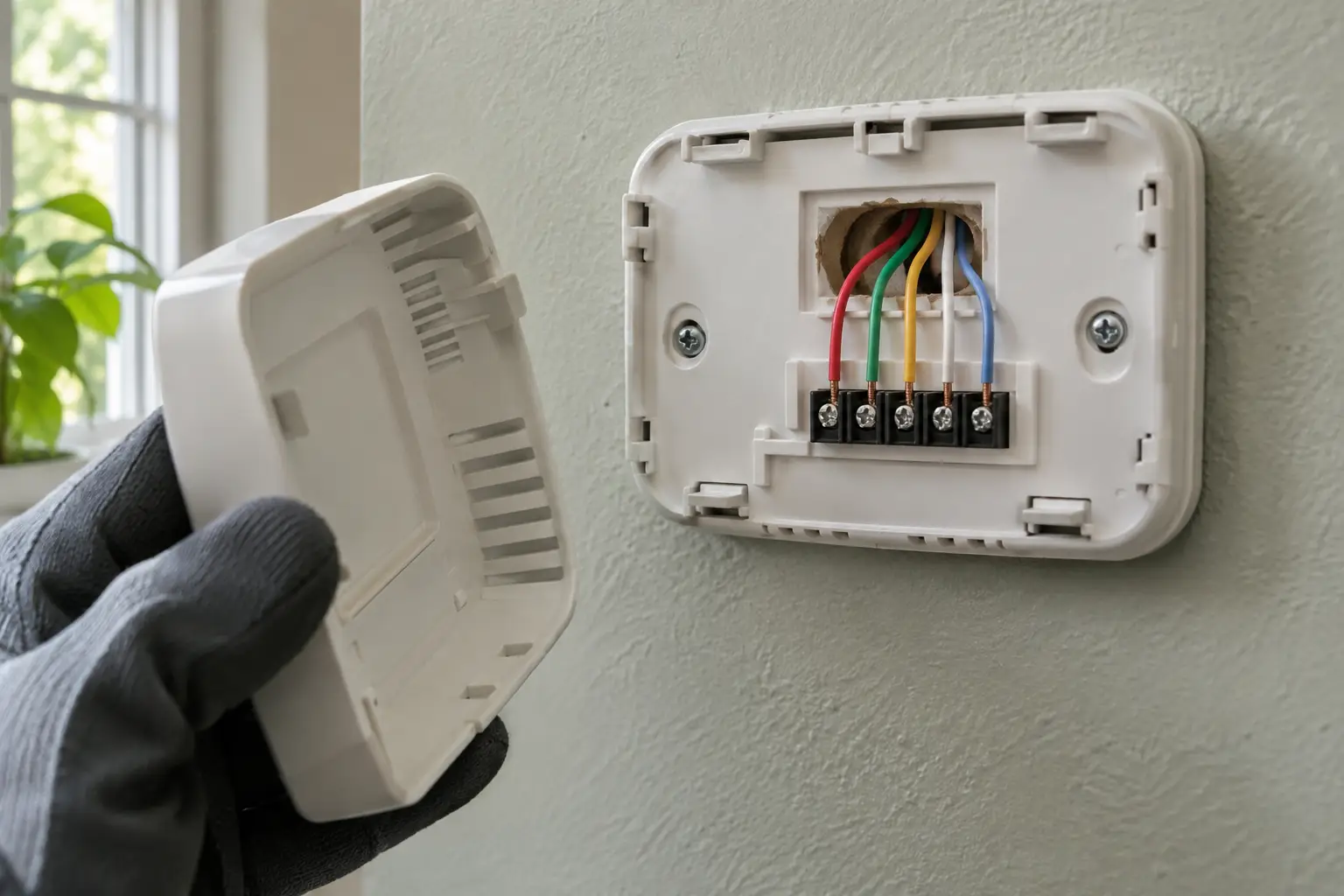
Thermostat repair
The display goes dark, or the AC never reaches the setting.
Read about thermostat repair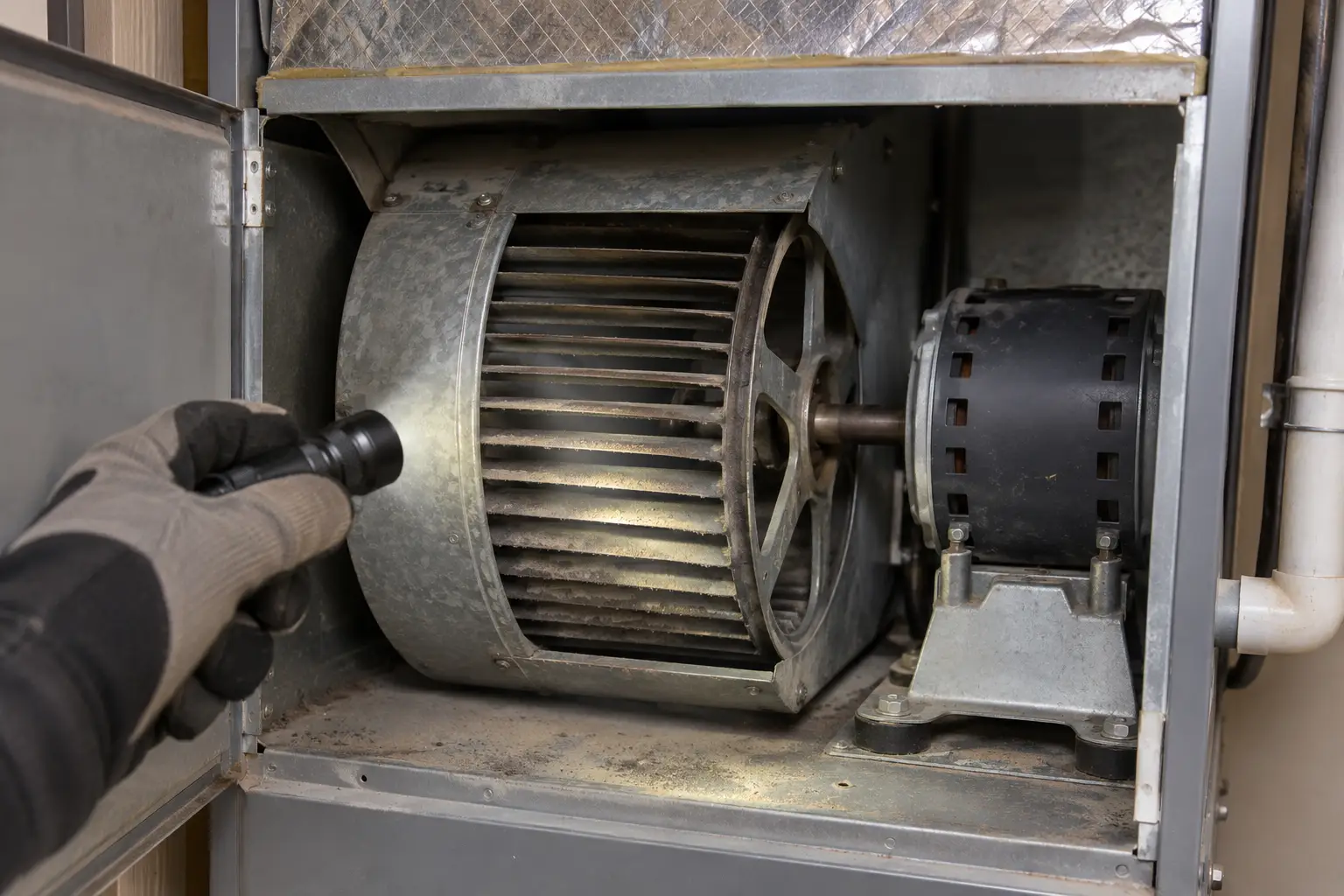
AC not cooling repair
The system runs, but warm or weak air comes out of the vents.
Read about AC not cooling repair
Heat pump repair
The heat pump will not heat, will not cool or runs nonstop.
Read about heat pump repair