
AC Repair in Lake Charles, LA
When your air conditioner quits or falls behind in Lake Charles heat, call us and we can send a licensed technician to your home.
Find your AC problem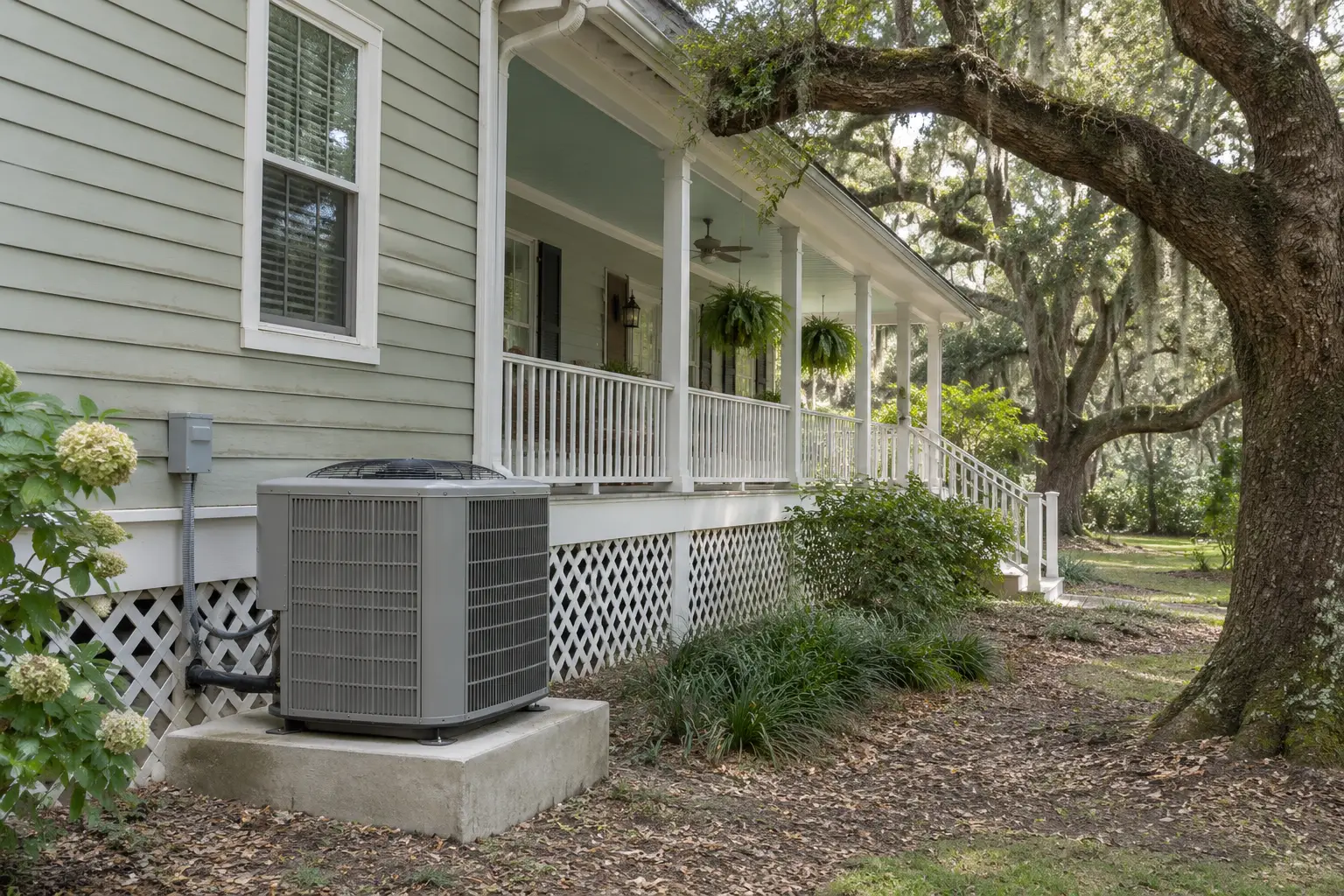
Pick the AC problem you have
Every repair we take calls about sits in one of four groups. Choose the one that sounds like your system, or open the full list of air conditioning services.
Why AC repair in Lake Charles is its own kind of job
An air conditioner in Southwest Louisiana works harder than most. It starts in spring, runs through a long, sticky summer and often keeps going well into fall, so small faults turn into breakdowns faster here.
Heat is only part of it. Our summer air holds so much water that the AC spends a large share of its effort drying the house. That puts extra load on the indoor coil, the drain line and the blower, and it is why a weak system feels clammy before it feels warm.
- Long run times wear out capacitors, contactors and fan motors sooner.
- Humid air feeds algae in condensate drain lines, which leads to overflows.
- Thunderstorms and power flickers stress compressors and control boards.
- Moist Gulf air and yard debris wear down the fins on outdoor coils.
Hurricane season adds its own risks. Flying debris can bend coil fins, standing water can reach units that sit low, and the surge when power returns can damage electrical parts. A quick check after a big storm often catches problems before the next heat wave.

Emergency AC repair in Lake Charles, and when it can wait
Not every AC problem needs a visit tonight. These two lists help you decide how fast to act and what to say when you call us.
Call right away if any of these are true
- The house is above the mid 80s and a baby, an older adult or someone with a health condition lives there.
- You smell burning plastic or see smoke near the indoor or outdoor unit.
- The breaker for the AC trips again after one reset.
- Water is coming through a ceiling below the attic air handler.
- The outdoor unit buzzes loudly, but nothing turns.
A daytime visit is usually fine when
- The AC still cools, but the house feels damp or the system runs longer than it used to.
- One room is warmer than the rest.
- The thermostat screen works, but the schedule acts strangely.
- You want a yearly tune up before the hottest months.
Keeping the house bearable while you wait
Draw the shades on sunny windows, set ceiling fans to push air downward and shut the doors of the warmest rooms. Skip the oven and the dryer until the AC is back. Drink water, and move pets and older family members to the coolest room on the lowest floor.
For an emergency AC repair call, turn the system off if you smell burning or see water near wiring, then follow the safe steps in our guide on what to do when your AC stops working.
How one call gets your AC looked at
There are three steps, and the first one is a short phone call with us.
Tell us what the AC is doing
Describe the sound, the airflow, any ice or water, and when the trouble started. Give us your address in Lake Charles.
A licensed technician comes out
A local AC repair technician visits your home, tests the system and finds the part or problem behind it.
You hear the fix and decide
The technician explains the repair in plain words. You decide whether to go ahead, with no obligation.
Details that help the technician most
If you can, note the brand on the outdoor unit, where the indoor unit sits (attic, closet or garage) and whether the outdoor fan spins. Mention a recent storm, a power outage or any work done on the system lately.
When the technician finds more than one problem
It is common for one failure to cause another. A dirty coil can freeze, and a weak capacitor can overheat a fan motor. The technician explains which problem came first and which repair matters most, so you can decide in the right order.
Signs your AC needs repair, and what usually causes them
Most calls start with one of these symptoms. The likely cause gives you a head start, and the link opens the matching repair page.
| What you notice | What often causes it | Where to read more |
|---|---|---|
| Warm air from the vents | Dirty coil, low refrigerant or a failed outdoor fan | AC not cooling repair |
| Ice on the copper line | Poor airflow or low refrigerant charge | Frozen AC coil repair |
| Hissing near the coils | A refrigerant leak in a coil or line | Refrigerant leak repair |
| Outdoor unit hums but the fan stays still | A weak capacitor or a worn contactor | Capacitor and contactor repair |
| Thermostat screen is blank | Dead batteries, a tripped float switch or a wiring fault | Thermostat repair |
| Water dripping from the ceiling or closet | A clogged condensate drain or a cracked pan | AC leaking water repair |
| Musty smell when the AC starts | Algae in the drain pan or a damp, dirty coil | AC tune up and maintenance |
| Heat pump blows cool air in heat mode | A stuck reversing valve or a defrost fault | Heat pump repair |
| AC turns on and off every few minutes | Low charge, a frozen coil or a thermostat problem | AC not cooling repair |
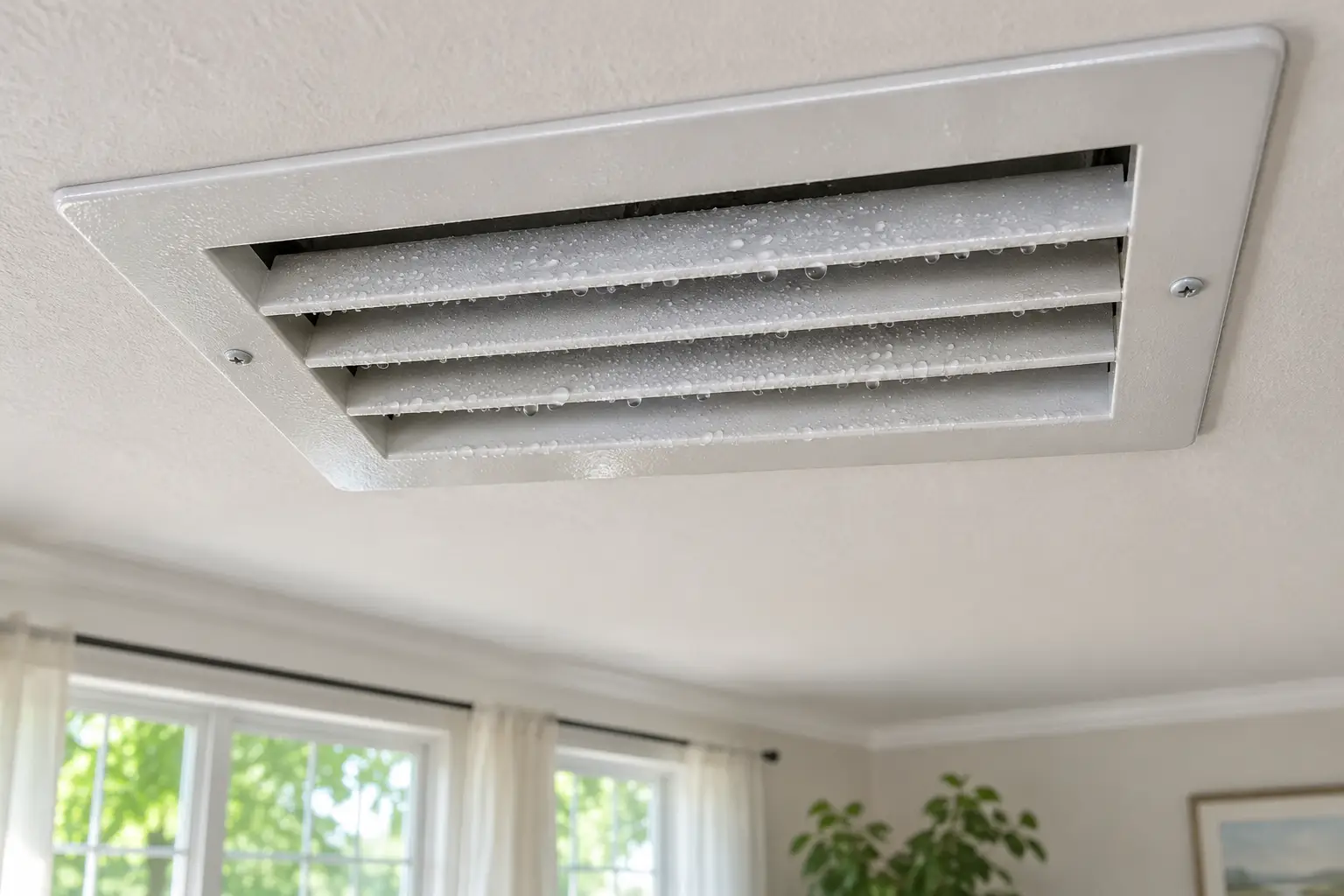
Humidity is half the work for an AC here
When outdoor air is warm and wet, your air conditioner has two jobs. It lowers the temperature, and it pulls water out of the air across the cold indoor coil. That water drips into a pan and leaves through the condensate drain.
Most people feel comfortable indoors when the humidity stays below about 60 percent. Above that, the air feels heavy even at a cool setting, and mold can start to grow in closets and on vents.
A house that feels sticky at a normal setting usually has a coil, airflow or drain problem. Read about drain line and leak repair or a yearly AC tune up.
The AC parts that fail most in long, hot summers
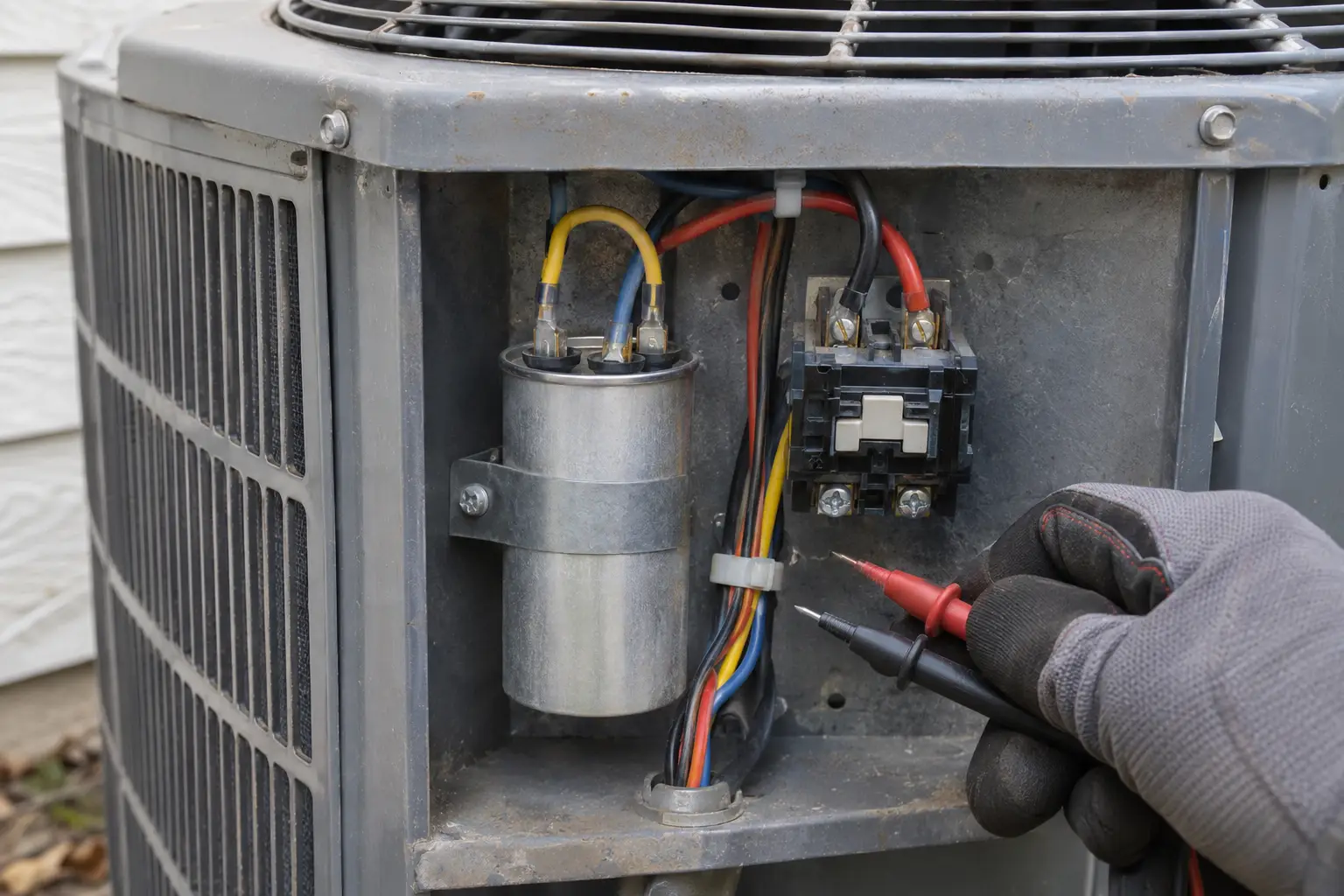
Most AC repair calls in Lake Charles come down to a handful of parts. Knowing them helps you describe the problem and understand what the technician finds.
Run capacitor
This small part stores a jolt of energy that gets the compressor and condenser fan spinning and keeps them steady. Heat bakes it over the years.
A weak one causes a humming unit, a fan that will not spin or a compressor that clicks on and off. It is one of the most common AC repairs in Lake Charles because summer heat shortens its life. See capacitor and contactor repair.
Contactor
The contactor is the switch in the outdoor unit that the thermostat closes to start cooling.
Its contacts pit and burn with every cycle, and ants and wasps like to nest in it. A stuck contactor can keep the unit running when the thermostat says stop, and a burned one leaves the outdoor unit silent while the indoor fan keeps blowing.
Outdoor fan motor
The fan on top of the outdoor unit pushes heat out of the coil. When it slows or stops, pressure climbs, the compressor overheats and the system shuts itself off. Bearings that squeal or a fan blade that turns slowly by hand are warning signs, and a technician can test the motor and its capacitor together.
Evaporator coil and blower
The indoor coil cools and dries the air, and the blower moves air across it. A dirty filter or coil cuts airflow, and the coil can freeze into a block of ice. Read about frozen AC coil repair.
Refrigerant lines and coils
Refrigerant does not get used up. If the charge is low, there is a leak somewhere in a coil, a joint or a valve. Topping it off without a repair only delays the next breakdown, which is why a technician looks for the leak. See refrigerant leak repair.
Compressor
The compressor is the pump that moves refrigerant through the system. It usually fails because of something else, such as a bad capacitor, a dirty outdoor coil or a low charge that lets it run hot. Testing the parts around it first can save a compressor that is struggling but not yet gone.
Control board and safety switches
Newer systems use circuit boards and pressure switches that shut the AC down when something is wrong. A storm surge can damage a board, and a tripped switch is often a symptom of another fault. A technician reads the board and tests each switch before replacing anything.
Condensate drain line and float switch
Algae and dust build a slime plug in the drain line during our humid months. A float switch on many systems kills power once the pan fills, sparing your ceiling while leaving the house warm until the line is opened. A yearly flush keeps the line open through the wettest months.
Heat pumps, thermostats and the yearly tune up
A heat pump cools all summer and flips into heating on winter nights, so in Lake Charles it hardly ever rests. When it struggles, check our heat pump repair page for the common causes.
Plenty of no cooling calls turn out to be a thermostat problem, such as dead batteries, a loose wire or a setting that changed. The thermostat repair page explains what to check first.
Smart and WiFi thermostats bring their own faults, like lost settings after a power outage or a missing common wire. A technician can check the wiring at both ends before you replace anything.
The best way to avoid a July breakdown is a spring tune up, when a technician cleans the coils, clears the drain and tests the electrical parts before the hard months.
AC repair across Lake Charles ZIP codes
AC Repair Lake Charles LA takes calls from homes in all five Lake Charles ZIP codes below, from older houses with attic air handlers to newer homes with heat pumps.
- 70601
- 70605
- 70607
- 70611
- 70615
When you call, tell us your street and ZIP code. If you are not sure which ZIP code applies, your street address is enough for us to plan the visit.
Lake Charles AC repair questions people ask us
Short, plain answers to the questions homeowners ask most when the air conditioner acts up.
-
Who comes out when I call about AC repair in Lake Charles?
A licensed local AC repair technician from Lake Charles comes to your home. When you call, we ask what the system is doing, where the units sit and when the trouble started, so the person who comes out knows what to look at first. The technician tests the system at your home and explains what failed before any repair begins.
-
Is a warm house in July an emergency?
It can be. A home that climbs past the high 80s indoors is a real health risk for babies, older adults, pets and anyone with heart or breathing trouble.
If someone in the house is at risk, say so on the call and treat it as an emergency AC repair. Our first hour guide shows how to keep rooms cooler while you wait, such as closing blinds on the sunny side and moving everyone to the coolest room.
-
Why does my AC run all day and still not cool the house?
The usual reasons are a dirty filter, a frozen indoor coil, a dirty outdoor coil, a low refrigerant charge from a leak or a failing fan or compressor part. Our guide on an AC running but not cooling walks through them in the order a technician checks.
Most of them get worse the longer the system runs, so it is better to call early than to let it struggle for days.
-
Can I reset my AC myself?
You can check that the thermostat is set to cool, replace a clogged filter and reset a tripped breaker once.
A repeat trip is a sign of a real electrical fault, such as a shorted motor or capacitor, so leave the breaker off and call. Keep the condenser panel closed, because a capacitor can stay charged after the power is cut.
-
Why is there water around my indoor unit?
Our muggy summers load the indoor coil with moisture all day long. If the drain line clogs with algae or the pan rusts through, that water ends up on the floor or the ceiling.
See our page on AC leaking water repair for what a technician does. Turning the system off and putting a towel or a pan under the drip limits the damage until help arrives.
-
Can I call about a heat pump as well?
Yes. Many homes in Lake Charles heat and cool with a heat pump, and the same outdoor unit runs almost all year. Our heat pump repair page explains the issues owners mention most, such as cool air in heat mode or ice that never clears.
-
How often should an AC get a tune up here?
Once a year is a good rule, best in spring before the long cooling season starts. A system that runs from spring into fall in Gulf heat collects dust, pollen and algae faster than one in a mild climate. Read about the AC tune up visit and what gets cleaned and tested.
-
Which parts of Lake Charles do you cover?
We take AC repair calls from homes in every part of Lake Charles, in the 70601, 70605, 70607, 70611 and 70615 ZIP codes. Tell us your street address on the call so the visit can be planned, and mention if the outdoor unit sits on a platform or the indoor unit is in the attic.
-
What should I do after a storm knocks out the power?
When power returns, wait a few minutes before you turn the AC back on and look at the outdoor unit first. If it has water around it, debris inside the fan or a bent coil, leave it off and call so a technician can check it before it runs.
Surges during storms can also damage the capacitor or the control board, even when the unit looks fine.
-
Can the technician tell me whether my AC is worth repairing?
Yes. Once the fault is found, the technician can tell you how worn the rest of the system looks, such as the condition of the coils, the compressor and the refrigerant type. That gives you what you need to choose between a repair now and planning for a new system later.
-
Does a tune up help with a sticky, humid house?
Often it does. A clean indoor coil, a clear drain and correct airflow let the AC pull more water out of the air. If the house still feels damp after a tune up, the technician can check the blower speed and the thermostat settings, which also affect how much moisture the system removes.
-
Will the technician tell me before any repair starts?
Yes. Before any work starts, the technician walks you through the failure and the planned fix. Saying yes or no is entirely up to you. Ask any question you have, such as what caused the failure and how to keep it from happening again.