
AC Repair Questions From Lake Charles Homeowners
Straight answers to the cooling questions Lake Charles homeowners bring up on calls, grouped into five topics.
Pick a question topic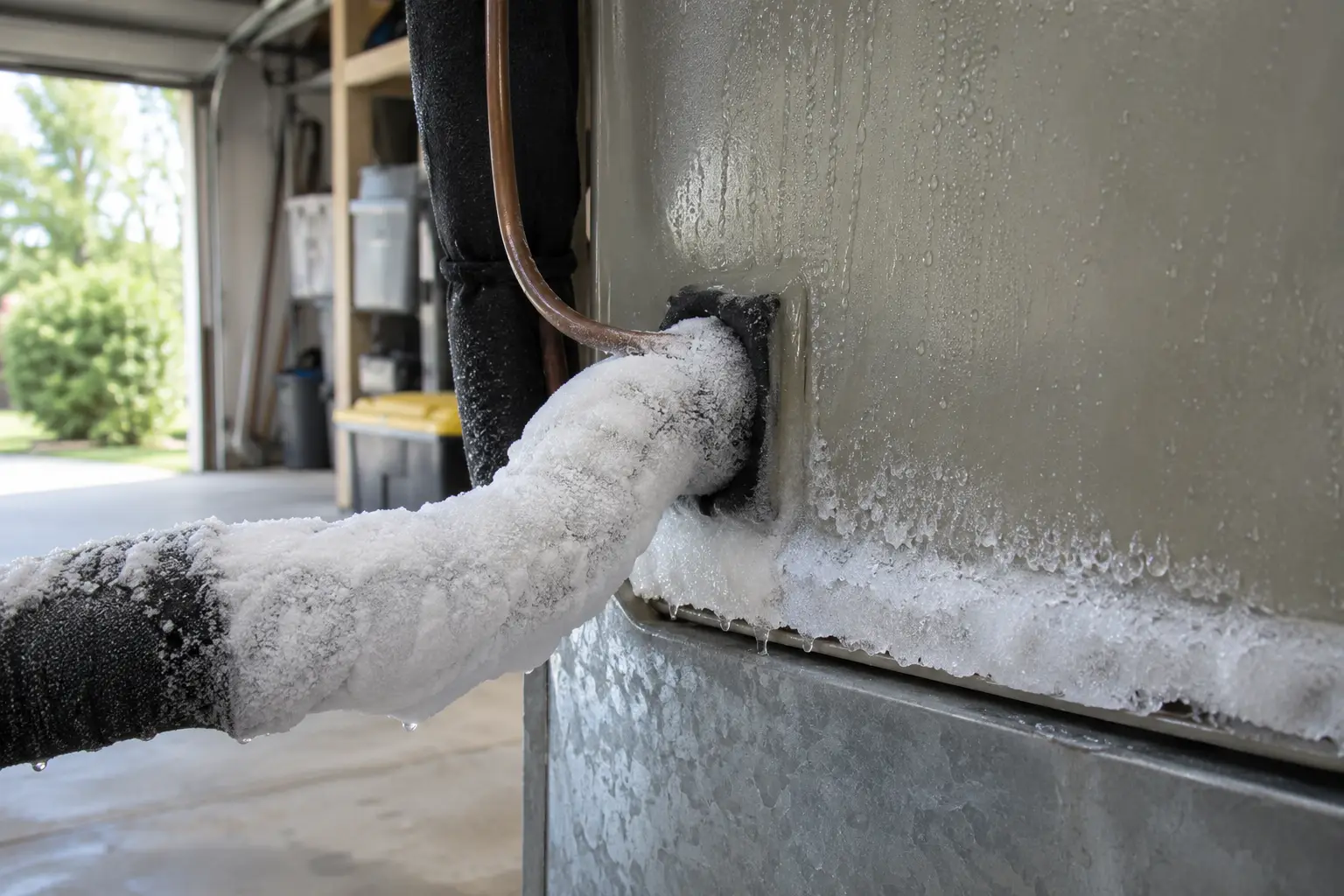
These answers come from the questions homeowners ask when they call about air conditioning repair in Lake Charles. Choose a topic to jump to its questions.
When the house will not get cool
Warm air, weak air and ice are the problems behind most summer calls. These answers help you narrow down which one you have before you call.
-
What usually causes an AC to stop cooling in summer?
Dirty filters and coils, failed capacitors, frozen indoor coils and refrigerant leaks cause most cases. Long run times in Lake Charles heat make each of them show up sooner. See AC not cooling repair for the full list.
-
How can I tell if my AC is low on refrigerant?
Cooling that fades over weeks, frost on the larger copper line and a hissing sound near the coils are common signs. Only gauge readings confirm it, and a low charge always means a leak. Our page on refrigerant leak repair explains the fix.
-
How can an AC freeze up in the middle of July?
The indoor coil dropped below freezing, usually from poor airflow or a low charge, and the humid air froze on it. Switch cooling off and let the blower melt the ice. Read about frozen AC coil repair for the causes.
-
Why does my AC blow warm air for a minute and then cool?
A short burst of warm air at start up is normal, especially when the ducts run through a hot attic. The air sitting in the ducts warms up between cycles. If the air never turns cool after several minutes, that is a fault worth a call.
-
Why does one room stay hot while the rest of the house cools?
Usually because of the duct that feeds that room. A crushed or disconnected duct in the attic, a closed damper or a room with a lot of west facing glass are the common reasons. Tell the technician which room it is.
-
Should the outdoor unit feel warm when the AC is running?
Yes. Warm air blowing out of the top of the outdoor unit means the system is moving heat out of the house. If the air up there feels no warmer than the yard, the system is not removing heat.
-
Can I run my AC if it is making a strange noise?
It depends on the noise. A soft hum and the whoosh of air are normal. Grinding, squealing, loud buzzing or banging point to a failing part, and running the system can make the damage worse. Turn it off and call.
-
Which summer setting makes sense for a Lake Charles house?
Many people find 76 to 78 degrees comfortable when the house is dry. If you need a much lower setting to feel cool, the house may be too humid, which points to a coil, airflow or drain problem rather than the setting.
-
My AC starts and stops over and over. What is going on?
That pattern, called short cycling, often traces back to a badly placed thermostat, an iced coil, lost refrigerant or equipment that is oversized for the home. It wears parts quickly. Start with the thermostat repair checks, then call if it continues.
-
Does closing vents in empty rooms help the AC?
On most home systems it does not. Shut registers push up duct pressure and starve the indoor coil of air, so the coil may ice over while the blower strains. Keep vents open unless a technician says otherwise.
Questions about electrical parts and thermostats
Small electrical parts and the thermostat decide whether the AC starts at all. Storms and long run times make them some of the most common repairs here.
-
What does an AC capacitor do?
Think of it as a small battery that kicks the compressor and condenser fan into motion and then keeps them turning smoothly. Heat wears it down, so it is one of the most common AC repairs here. See capacitor and contactor repair.
-
Why does my outdoor unit buzz but nothing happens?
A buzz with no fan movement usually means the motors are trying to start without enough help, most often because of a weak capacitor or a stuck contactor. Turn the system off so the motors do not overheat, and call.
-
What makes an AC trip its breaker over and over?
A breaker trips when a part draws more current than it should. A shorted motor, a failing compressor, a bad capacitor or loose wiring are common causes. Reset it once at most. A second trip means a fault that needs testing.
-
Why is my thermostat not turning on the AC?
Check the mode, the setting and the batteries first. If those are fine, the problem may be wiring, a blown fuse on the control board or a float switch that cut power because of water. Our page on thermostat repair covers each one.
-
Does my smart thermostat need a common wire?
Many do. A common wire gives the thermostat steady power from the AC system. Without one, some smart thermostats drain their batteries, drop their WiFi connection or turn the AC on and off at random.
-
What is the box on the wall next to my outdoor unit?
That is the disconnect. It lets a technician cut power to the outdoor unit while working on it. Some have a pull out block or a lever, and some hold fuses. If the AC is silent, a tripped or pulled disconnect is worth a look, but leave fuse work to a technician.
-
Why does my AC click but not start?
A click usually means the thermostat signal reached the contactor, but power is not getting through or a motor cannot start. A worn contactor, a weak capacitor or a compressor problem are the common causes. Turn it off and call rather than trying again and again.
-
Can lightning damage my air conditioner?
A nearby strike or the surge that follows can damage capacitors, contactors, control boards and even compressors. If the AC will not start after a storm, leave it off and have it tested before running it.
Questions about water, humidity and smells
In our humid climate, an AC handles a lot of water. These questions come up when that water goes the wrong way.
-
Why is my AC dripping water inside?
The condensate drain is most likely clogged, so water backs up and overflows the pan. A rusted pan, a loose fitting or a melting frozen coil can also cause it. Turn the system off and see AC leaking water repair.
-
What is the pipe dripping outside my house?
A pipe near the foundation that drips while the AC runs is the condensate drain, and dripping is normal. A pipe high on a wall that drips usually belongs to the backup drain under an attic unit, which means the main drain may be clogged.
-
The AC is on, so why does the house still feel damp?
The AC may not be running long enough or cold enough at the coil to pull water from the air. A low charge, a dirty coil, a fan speed set too high or a system that is too big for the house are common reasons.
-
What causes a musty smell when the AC turns on?
Standing water and growth in the drain pan, a damp dirty coil or moisture in the ducts. Clearing the drain and cleaning the coil usually fixes it. A smell that keeps coming back points to a drain or duct problem that needs a closer look.
-
What humidity level should my house be?
Most homes feel comfortable when indoor humidity stays below about 60 percent, and many people prefer somewhere between 40 and 50 percent. A small humidity meter from a hardware store lets you keep an eye on it.
-
Why is there water in my attic around the AC?
The attic unit pan or its drain is overflowing, or the ducts are sweating in the humid attic air. Turn the AC off, catch what you can and call, since water above a ceiling can soak through quickly. See AC drain line and leak repair.
-
Can high humidity damage my house?
Over time, yes. Air that stays damp feeds mold on walls, in closets and on vents, warps wood floors and doors and makes the house smell stale. Keeping the AC coil, drain and airflow in good shape is the best defense in our climate.
-
Can I pour bleach down my AC drain line?
Do not do it without knowing your system. Strong chemicals can damage some pans, pumps and coils. A technician can clear the line safely and tell you what, if anything, is safe to use between visits.
Questions about heat pumps and tune ups
Heat pumps work in both seasons, and every system benefits from a yearly visit. These answers cover the questions owners ask most.
-
How is a heat pump different from a regular central AC?
Picture a central AC with a reverse gear that lets it warm the house in winter. It carries a few extra parts, such as a reversing valve and a defrost control. Our page on heat pump repair explains them.
-
Why does my heat pump steam in winter?
Chilly, wet mornings coat the outdoor coil in frost, so the unit briefly switches into defrost to clear it. The steam is that frost evaporating. It is normal unless the ice never clears.
-
How often should I change my AC filter?
Check it monthly from spring through fall. Basic one inch filters often need changing every one to three months here, sooner with pets or dust. Thicker media filters last longer, but check them anyway.
-
Which tasks are part of a tune up visit?
Coil cleaning, a drain line flush, tests on the capacitor, contactor and motors, refrigerant readings and a thermostat check. Read the full list on the AC tune up and maintenance page.
-
Does a heat pump work during a Lake Charles cold snap?
Yes. On the coldest nights its backup heat strips help, so the house stays warm even when the heat pump alone would struggle. If you notice the strips running all the time on mild days, the heat pump itself may need repair.
-
When should I book a tune up in Lake Charles?
Early spring is best, before the long run of hot, humid days. Homes with a heat pump may want a quick fall visit as well, ahead of the chilly nights.
-
Should I cover my outdoor unit in winter?
In Lake Charles it is usually not needed, and a heat pump must never be covered because it runs in winter. A tight cover on a standard AC can trap moisture. Keeping leaves and debris off the top is enough.
-
How long does a home air conditioner usually last?
It varies a lot with care, climate and how hard the system works. Systems here run many more hours each year than in cooler places, so regular cleaning and early repairs matter more for how long yours lasts.
Questions about calling us and the visit
What to expect from the first call to the moment the technician leaves.
-
What happens when I call?
We ask what the AC is doing, when it started and where you are in Lake Charles. After that, we can send a licensed Lake Charles AC repair technician to test the system at your house.
-
Must I figure out the problem myself first?
No. Describe what you see, hear and feel, and the technician does the testing. Notes on the thermostat display, the outdoor fan and any ice or water are a big help.
-
Who comes to my home?
A licensed AC repair technician based in Lake Charles. They test the system, explain what failed and describe the repair before any work begins.
-
Am I committed to the repair once the technician visits?
No. Booking a visit commits you to nothing. The technician reports what turned up and how it could be fixed, and the yes or no is yours.
-
Which areas do you cover?
Lake Charles only. We take calls from homes in ZIP codes 70601, 70605, 70607, 70611, 70615.
-
Can I call before something breaks?
Yes. If the AC sounds different, cools a little less than last year or the house feels damp, call and describe it. Catching a weak part early is easier than a breakdown in July. A spring AC tune up is another good option.
-
Is there anything I should do before the technician gets here?
Clear a path to the indoor and outdoor units, put pets in another room and note anything you noticed. If the AC stopped completely, our guide on what to do when your AC stops working covers the safe steps.